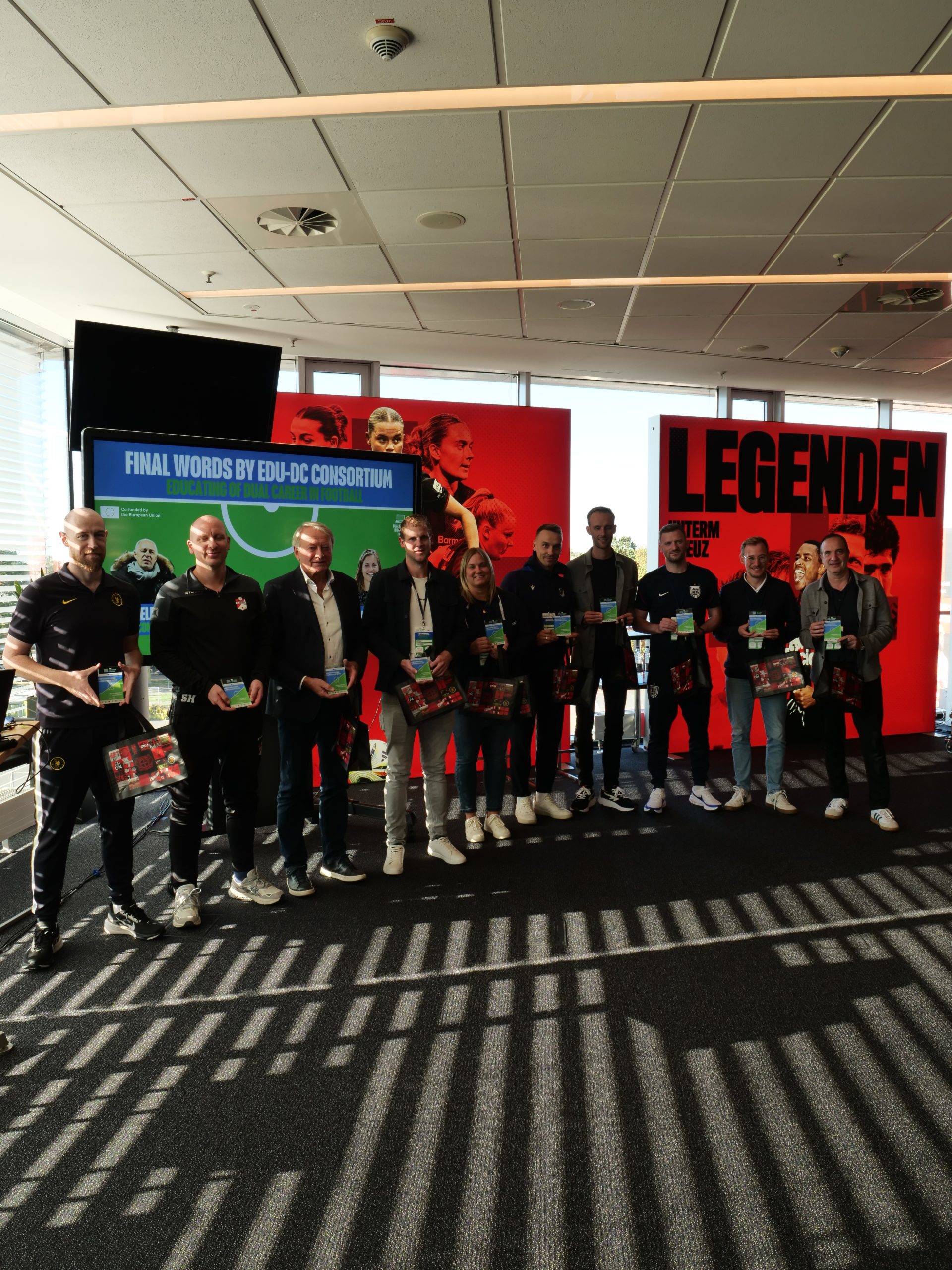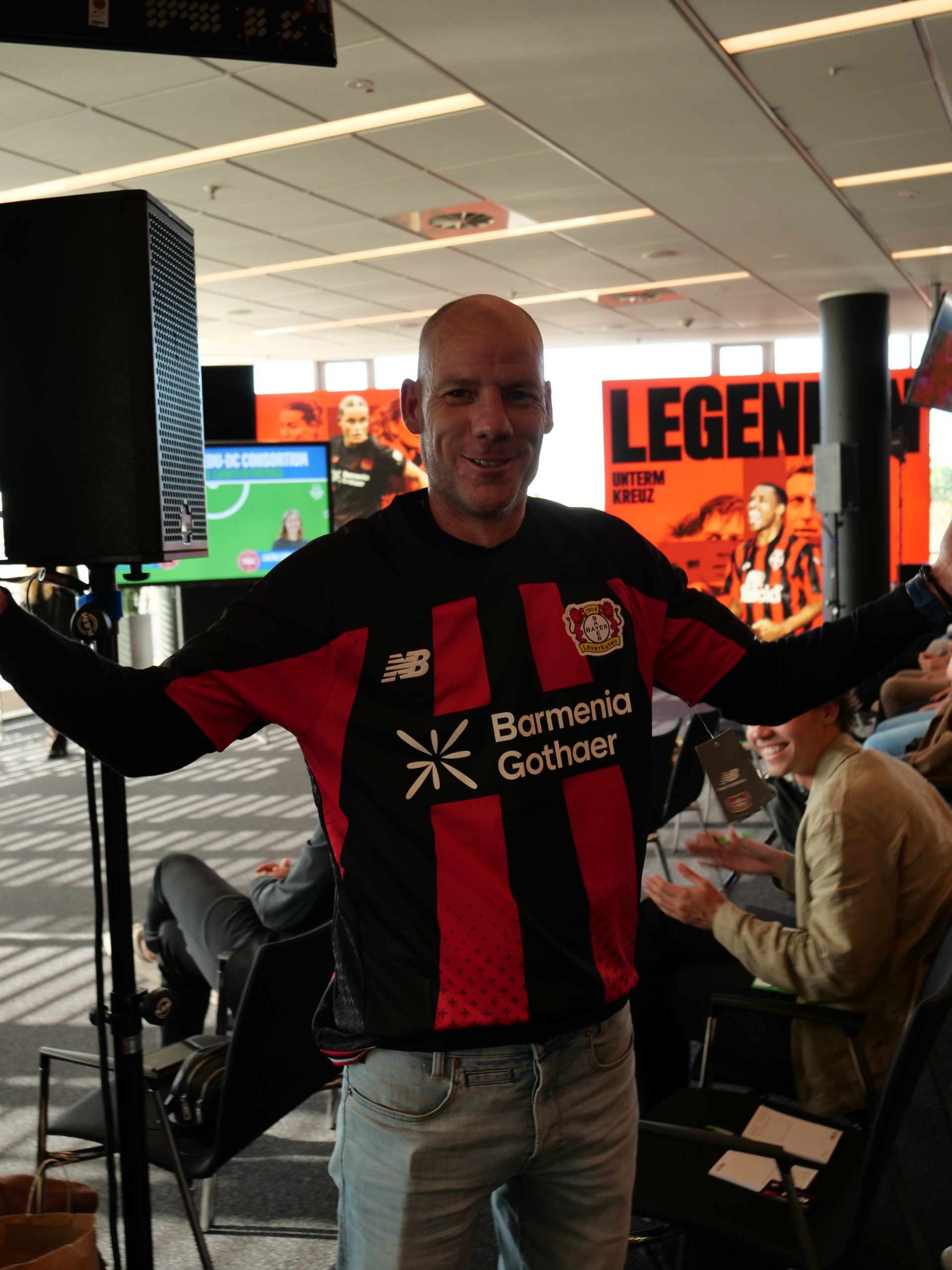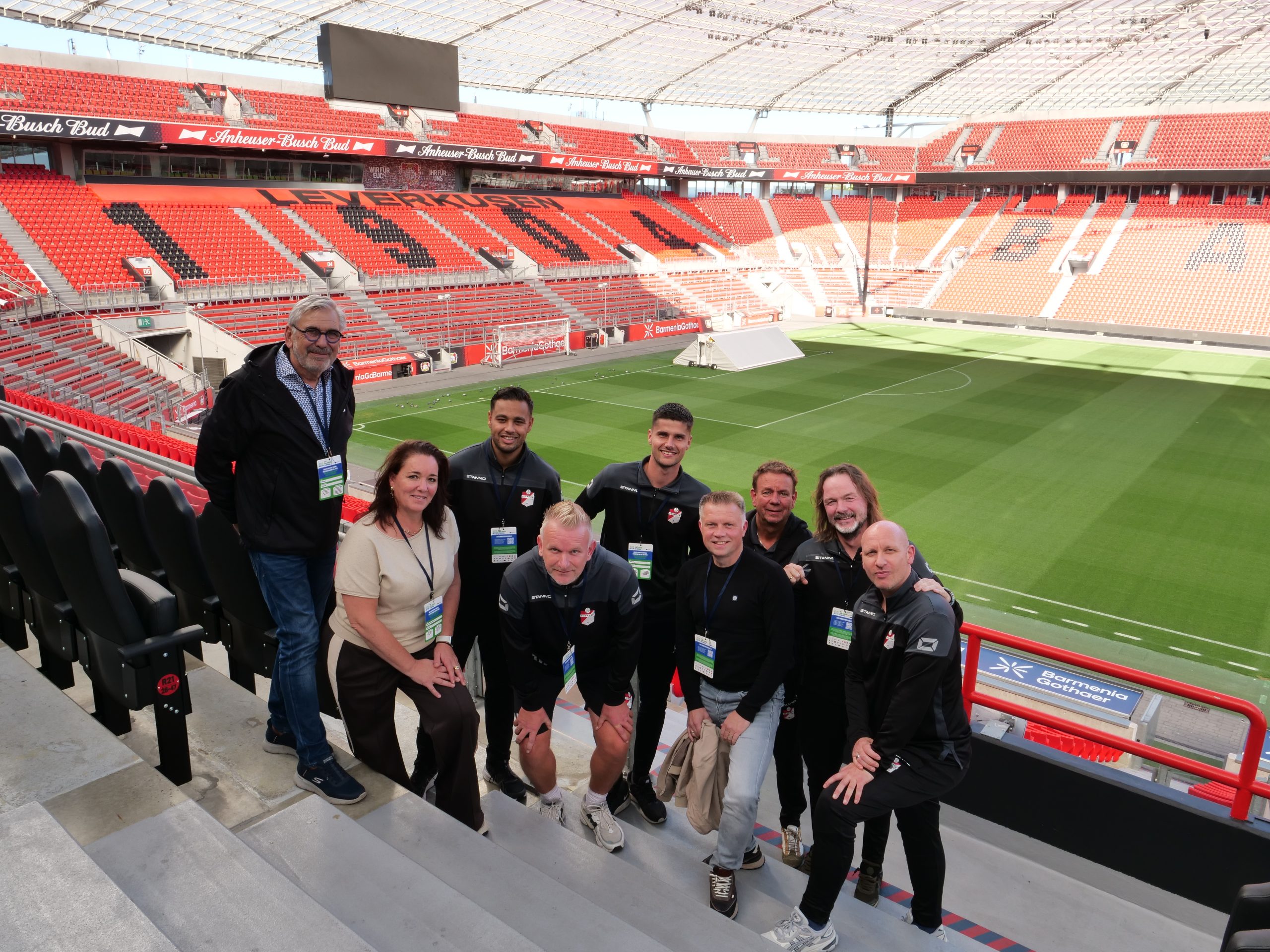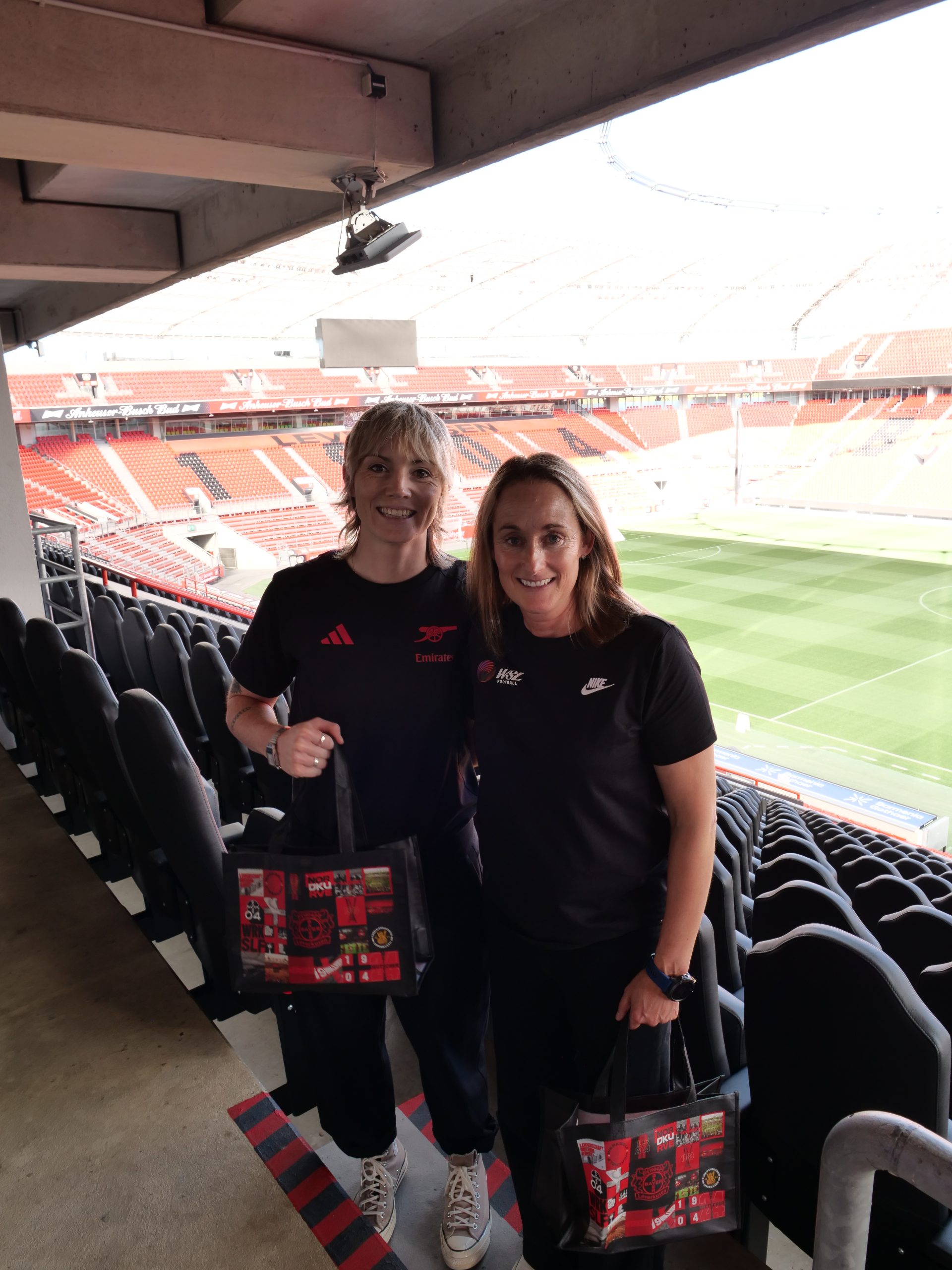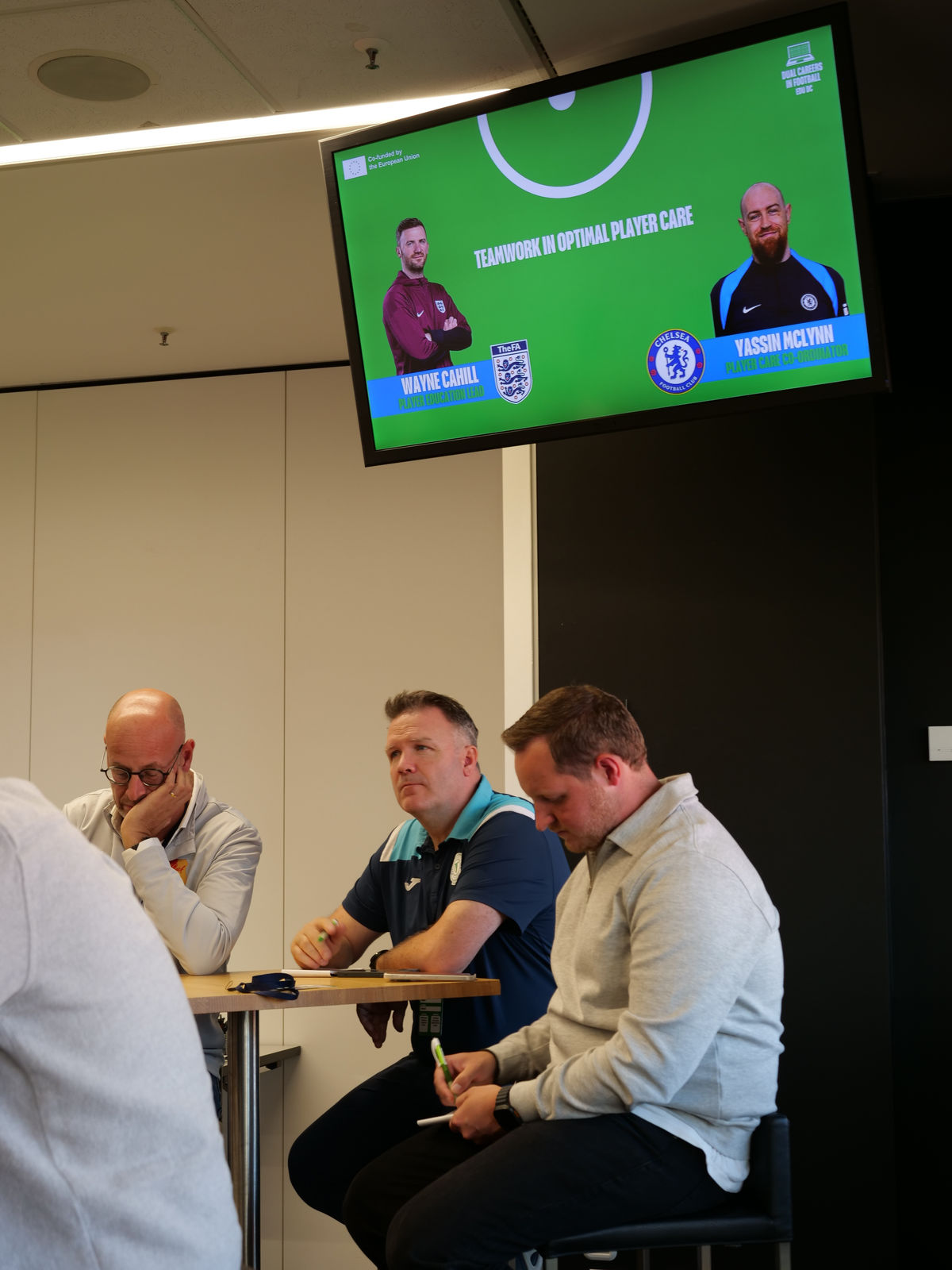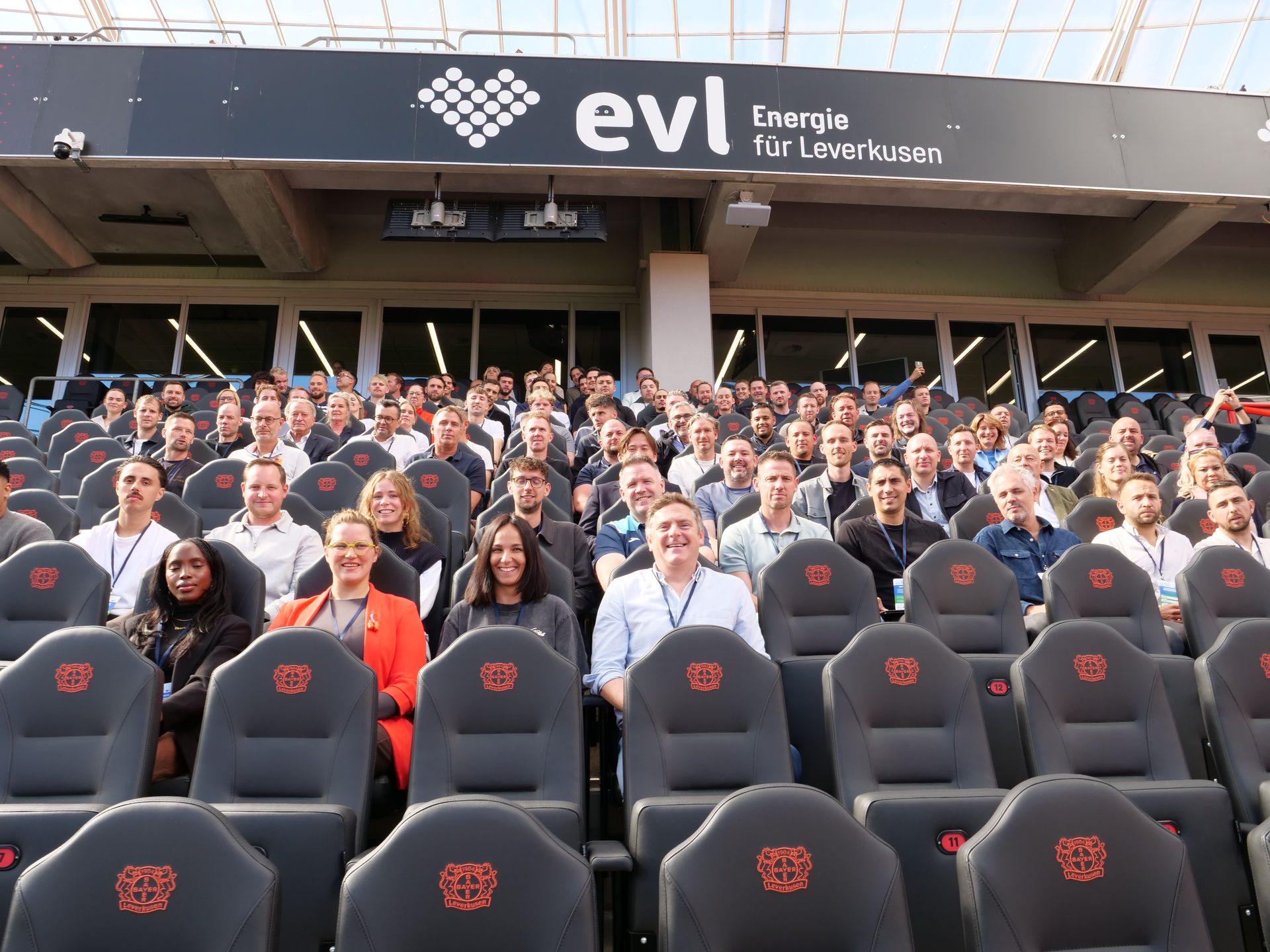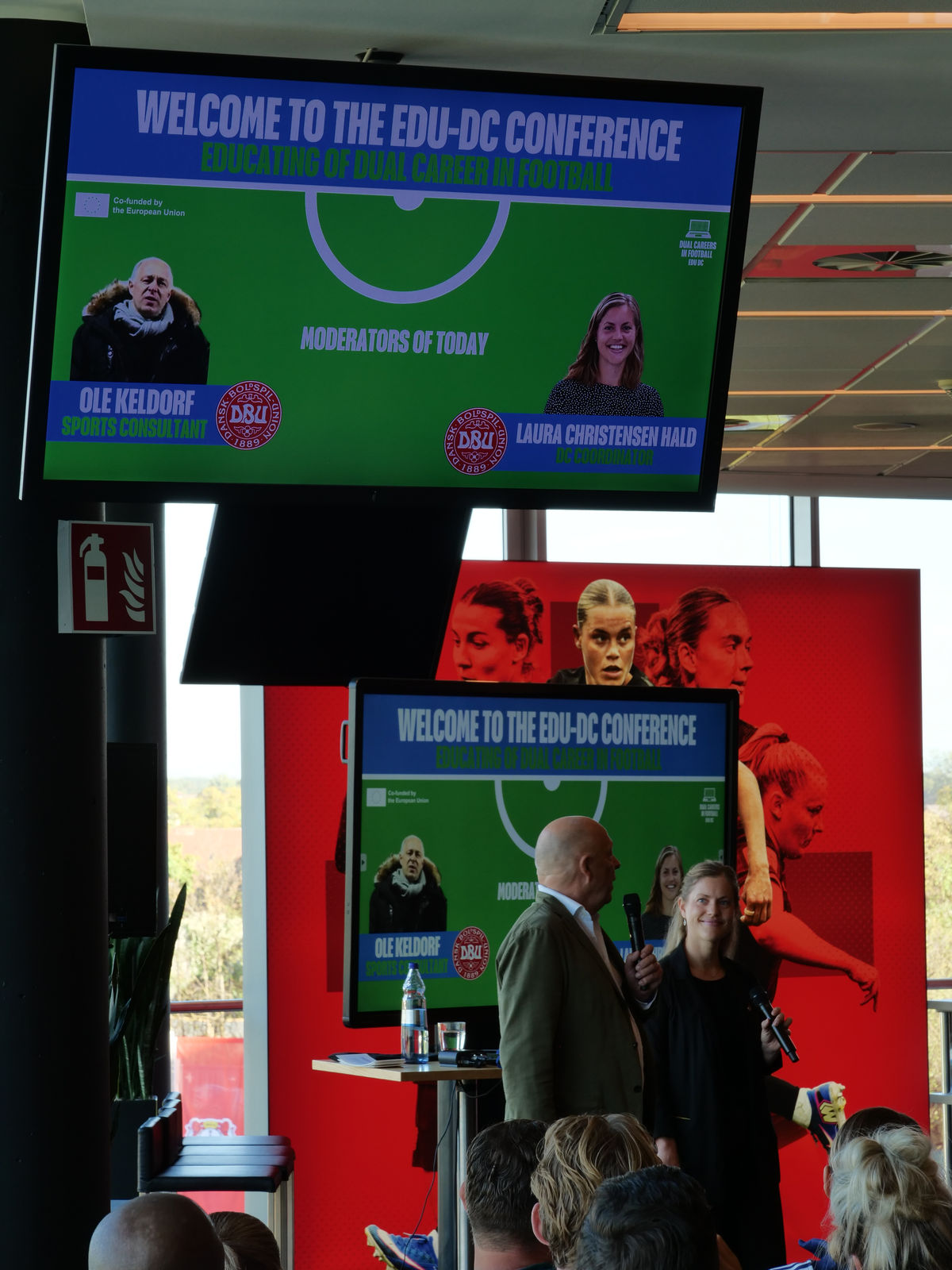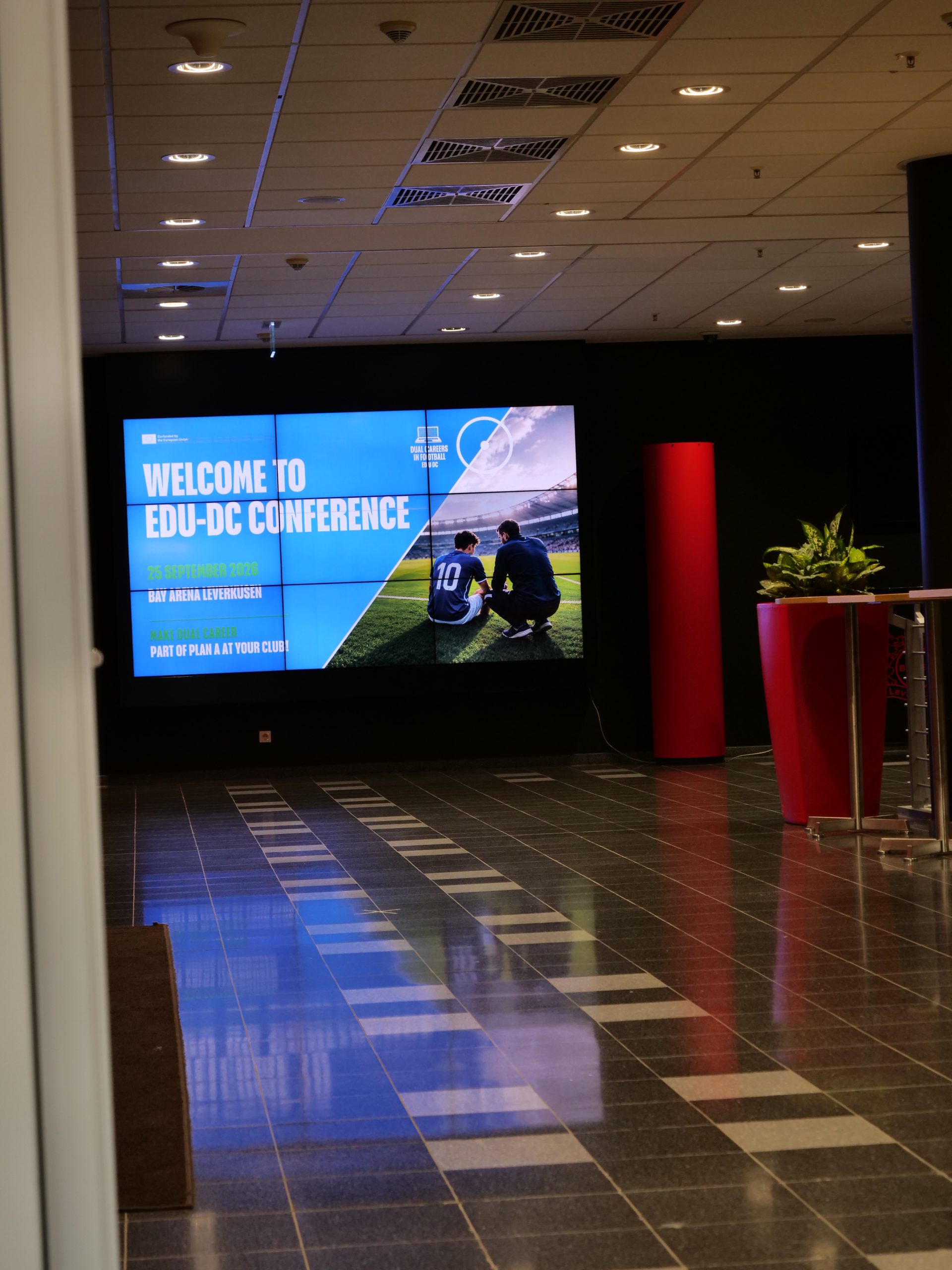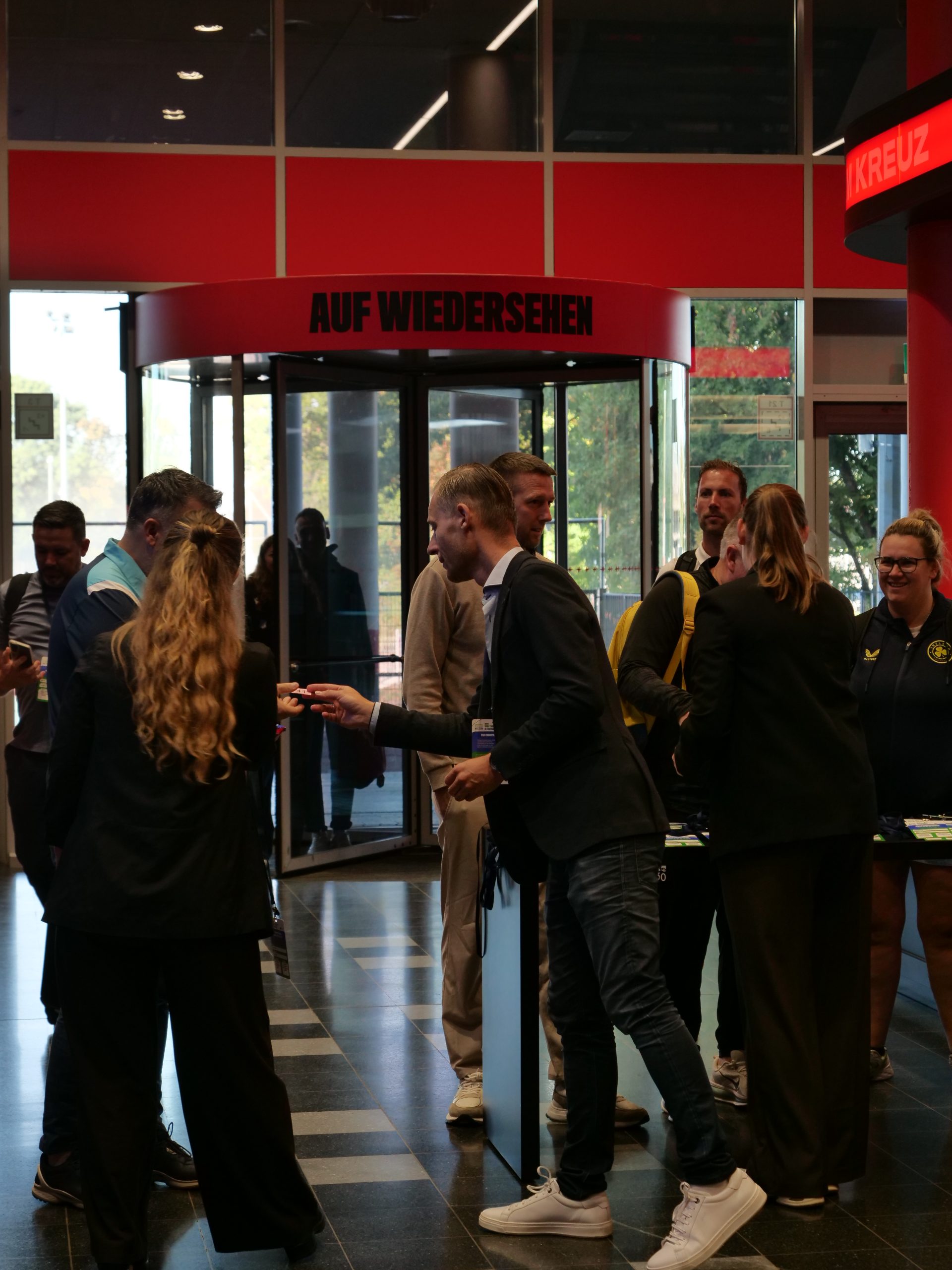
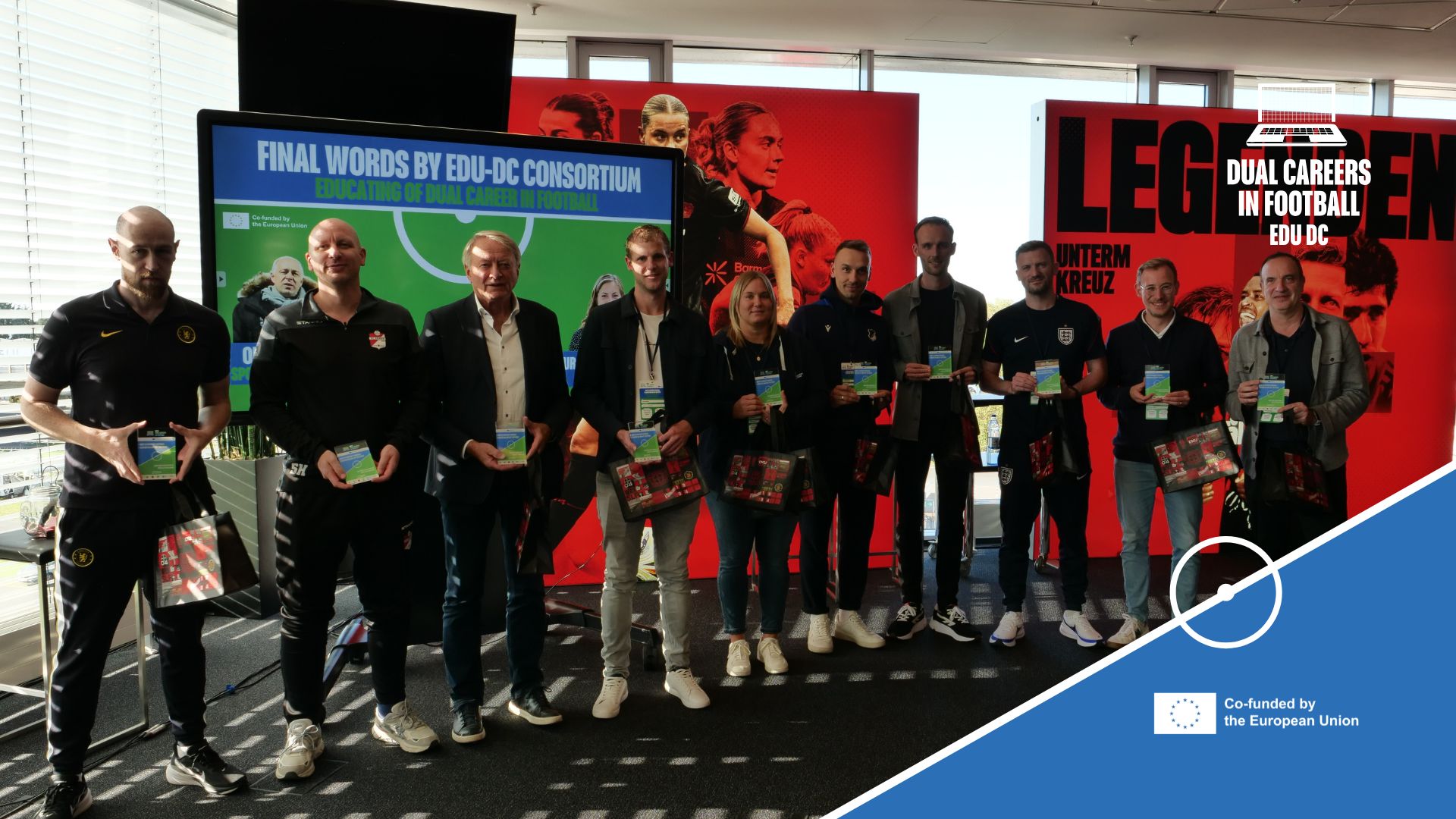
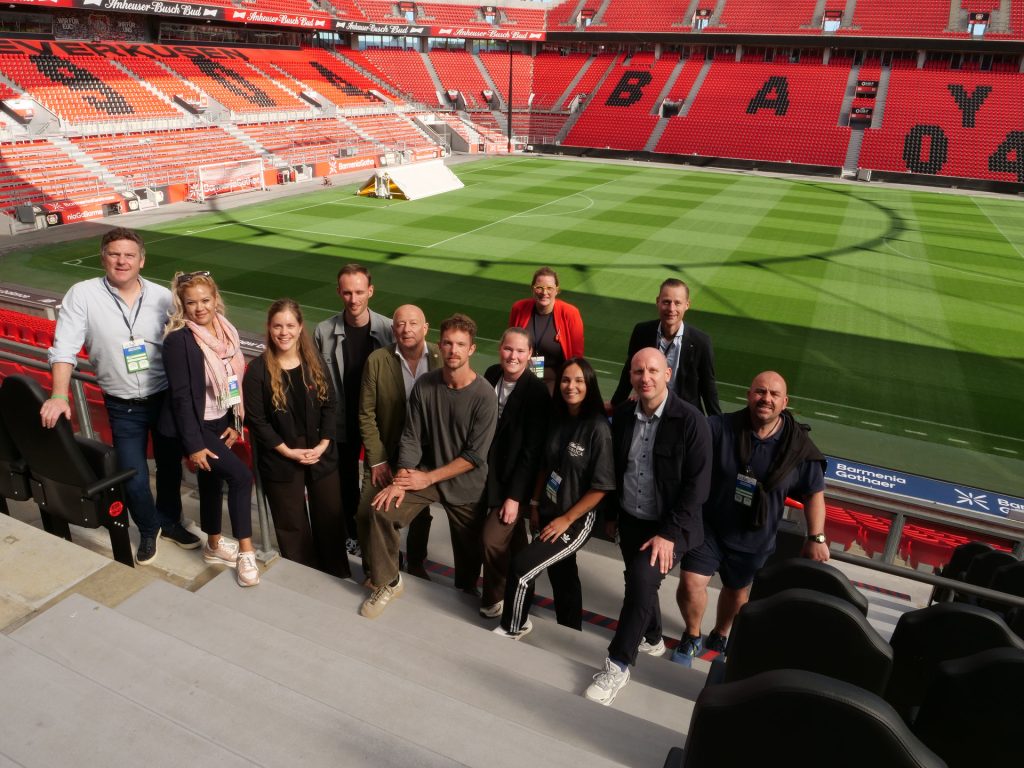
On 25 September 2026, BayArena in Leverkusen became a meeting point for football professionals from across Europe as the EDU-DC International Conference “How to Support Football Players on and off the Pitch” brought together clubs, football federations, coaches, dual career experts, researchers and professionals working in player development.
Hosted at the home of Bayer Leverkusen, the conference marked one of the final major milestones of the EDU-DC – Education for Dual Careers of Football Talents project and, more importantly, created a space to discuss a question that has been at the heart of the project from the beginning:
How can football help talented young players pursue their sporting ambitions while continuing to develop through education, personal growth and preparation for life beyond the pitch?
The answer that emerged throughout the day was clear – supporting a dual career is not about asking young players to choose between football and education. It is about creating an environment in which both can become part of their development.
From best practices to the person behind the player
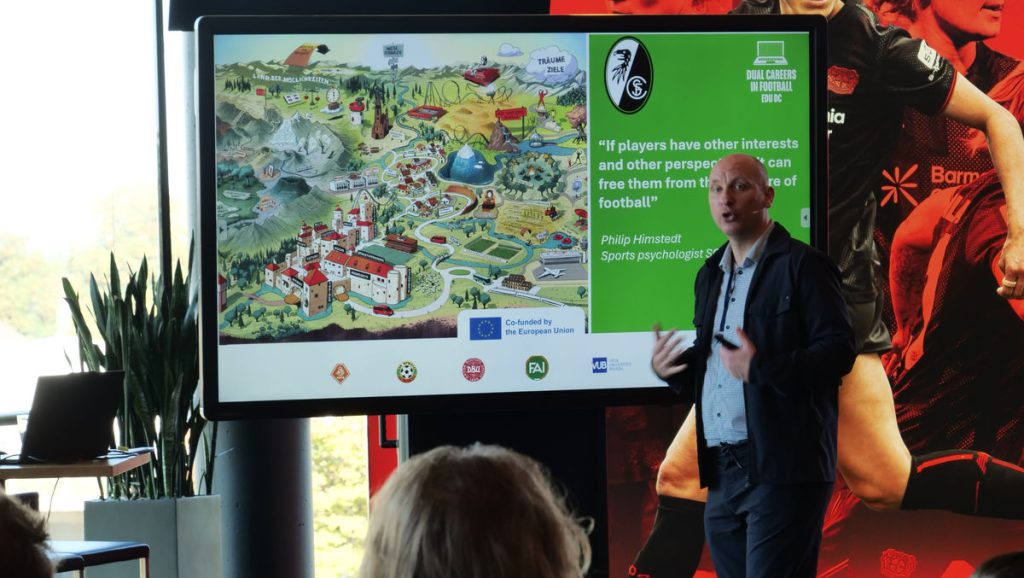
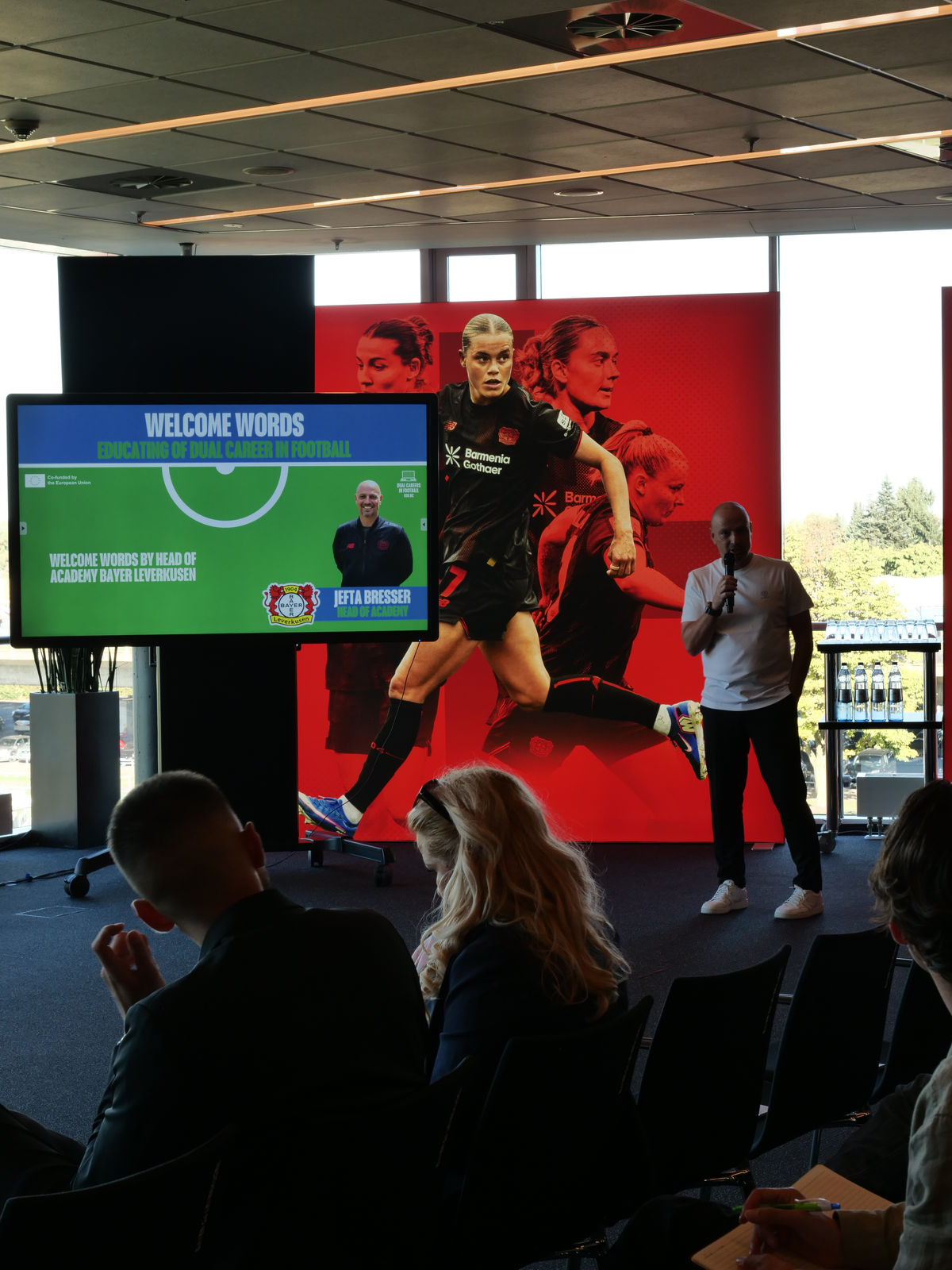
Following the opening and welcome at BayArena, the conference began by looking at what dual career support can mean in practice.
EDU-DC Dual Career Expert Stephan Hakkers presented insights from the project’s international study of dual career best practices in football. His work included visits to environments such as La Masia at FC Barcelona, SC Freiburg and RSC Anderlecht, with lessons from these different approaches subsequently incorporated into the educational programme for Dual Career Coordinators participating in EDU-DC.
The focus then moved from systems to people.
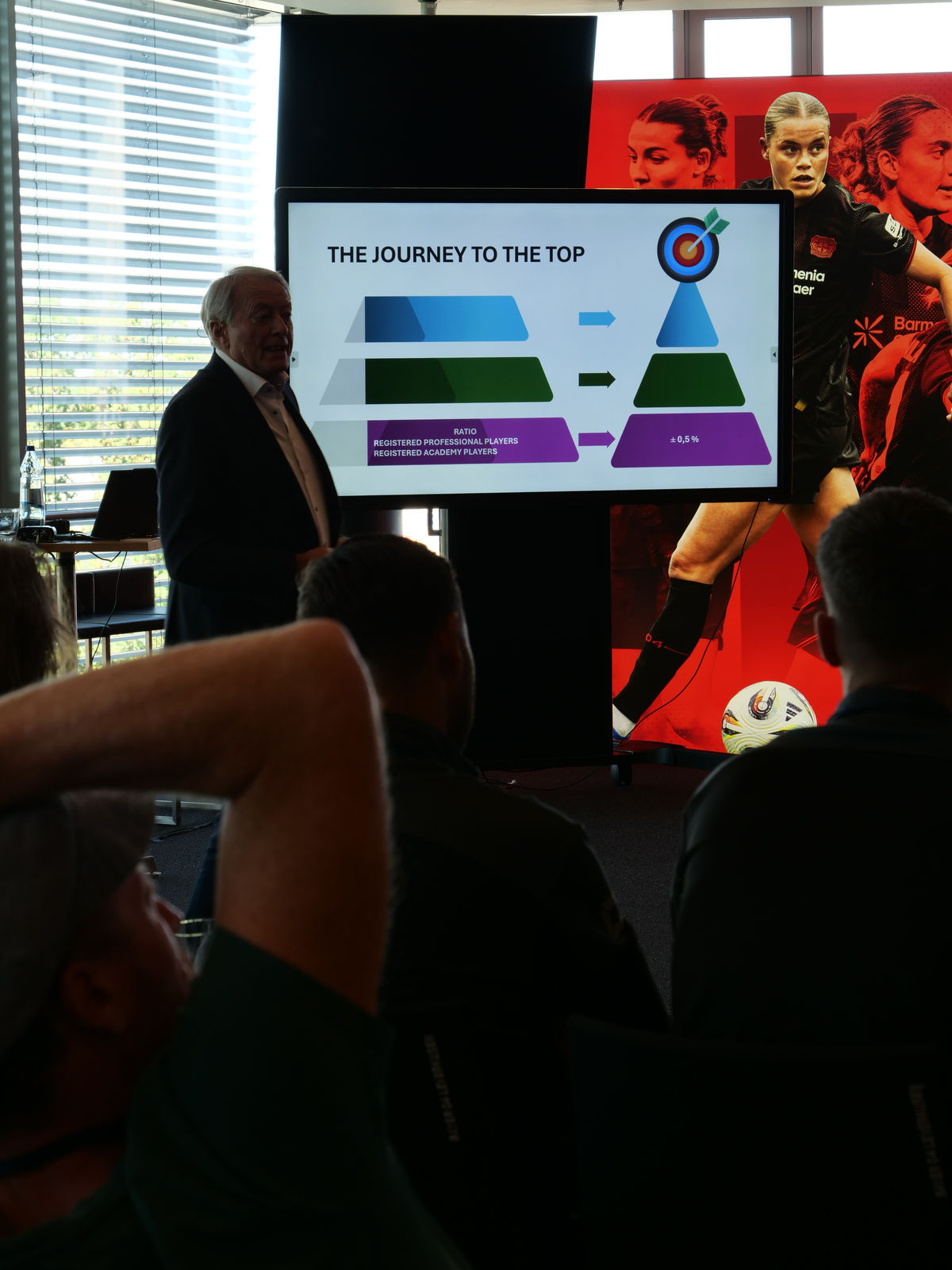
Former professional football coach and senior football consultant Ariël Jacobs drew on more than four decades of experience in football to explore the coach’s role in holistic talent development.
At the heart of his keynote was a simple but fundamental idea: to develop the footballer, we also need to understand the person behind the player. His contribution challenged the traditional “either/or” choice that young talents can face between professional football and education and asked whether the football environment can instead make room for “and–and.”
That idea became a recurring theme throughout the conference.
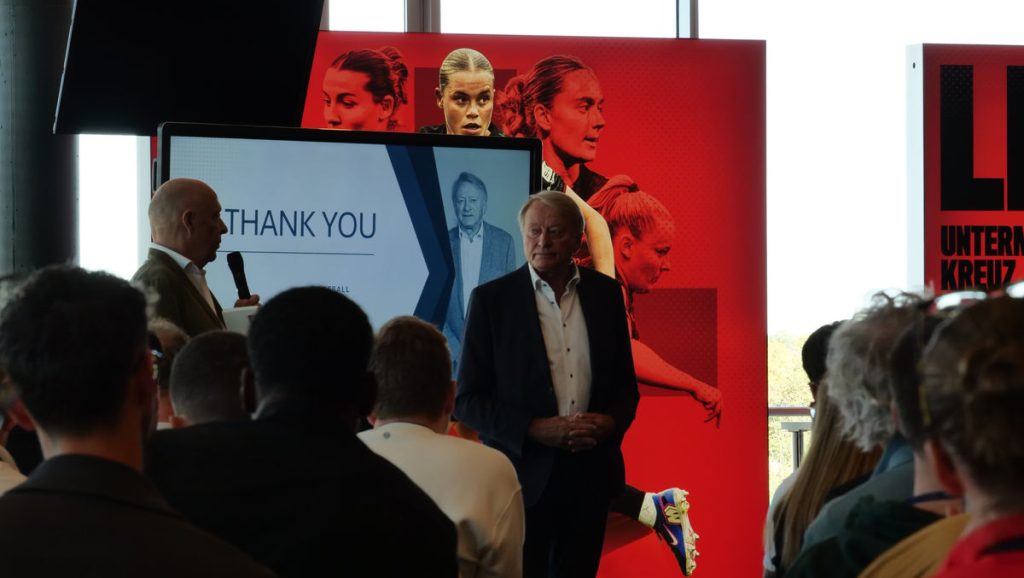
Dual career is a team effort
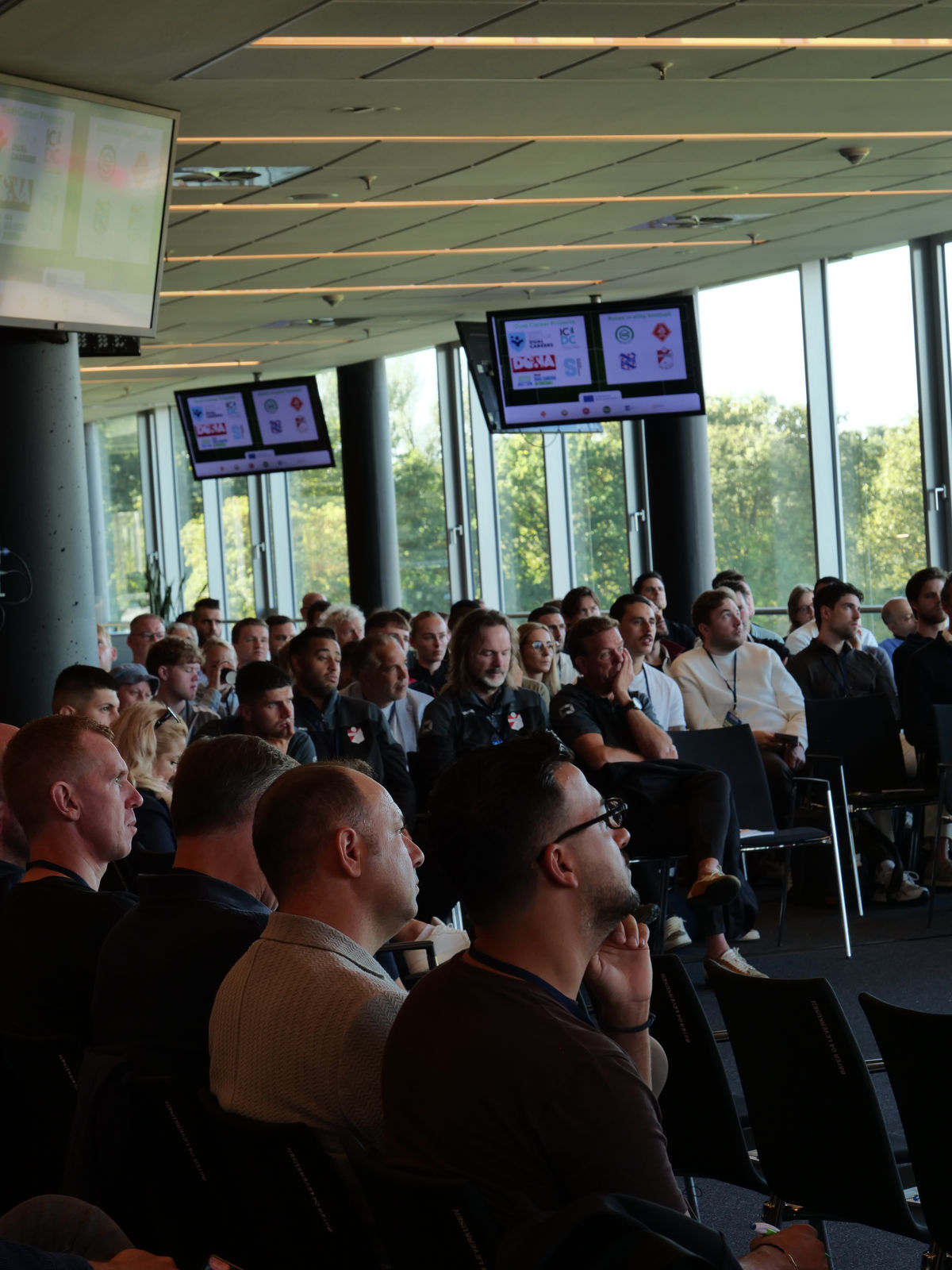
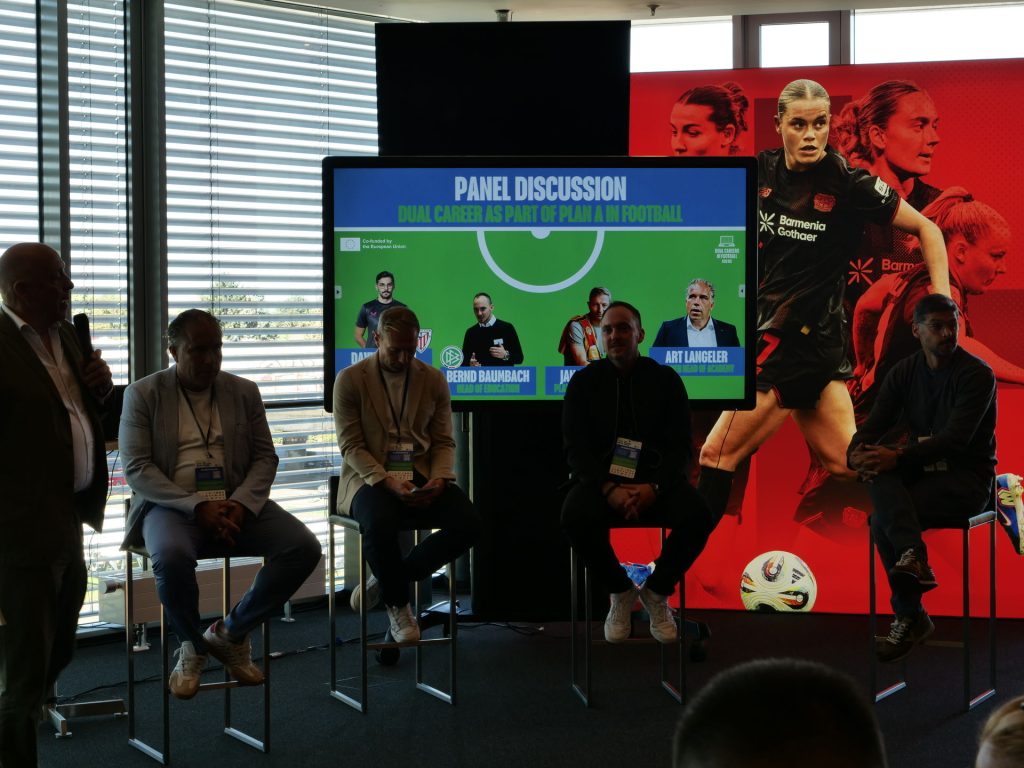
The conversations continued through panel discussions and interviews that brought together different perspectives from across the football ecosystem.
Representatives of clubs, pilot organisations and the EDU-DC network discussed what happens when dual career principles move from theory into the everyday reality of a football club.
An important voice came from the Dual Career Coordinators and pilot clubs involved in EDU-DC. Their experiences demonstrated that effective dual career support requires more than one programme or one designated person. It requires cooperation between coaches, clubs, schools, families and specialists, with the individual player remaining at the centre of that network.
The programme also looked beyond the duration of the project itself. Perspectives from the European Commission and UEFA Academy contributed to a wider discussion about the future of dual career and its place within European sport and football.
Six workshops, different approaches, one common goal
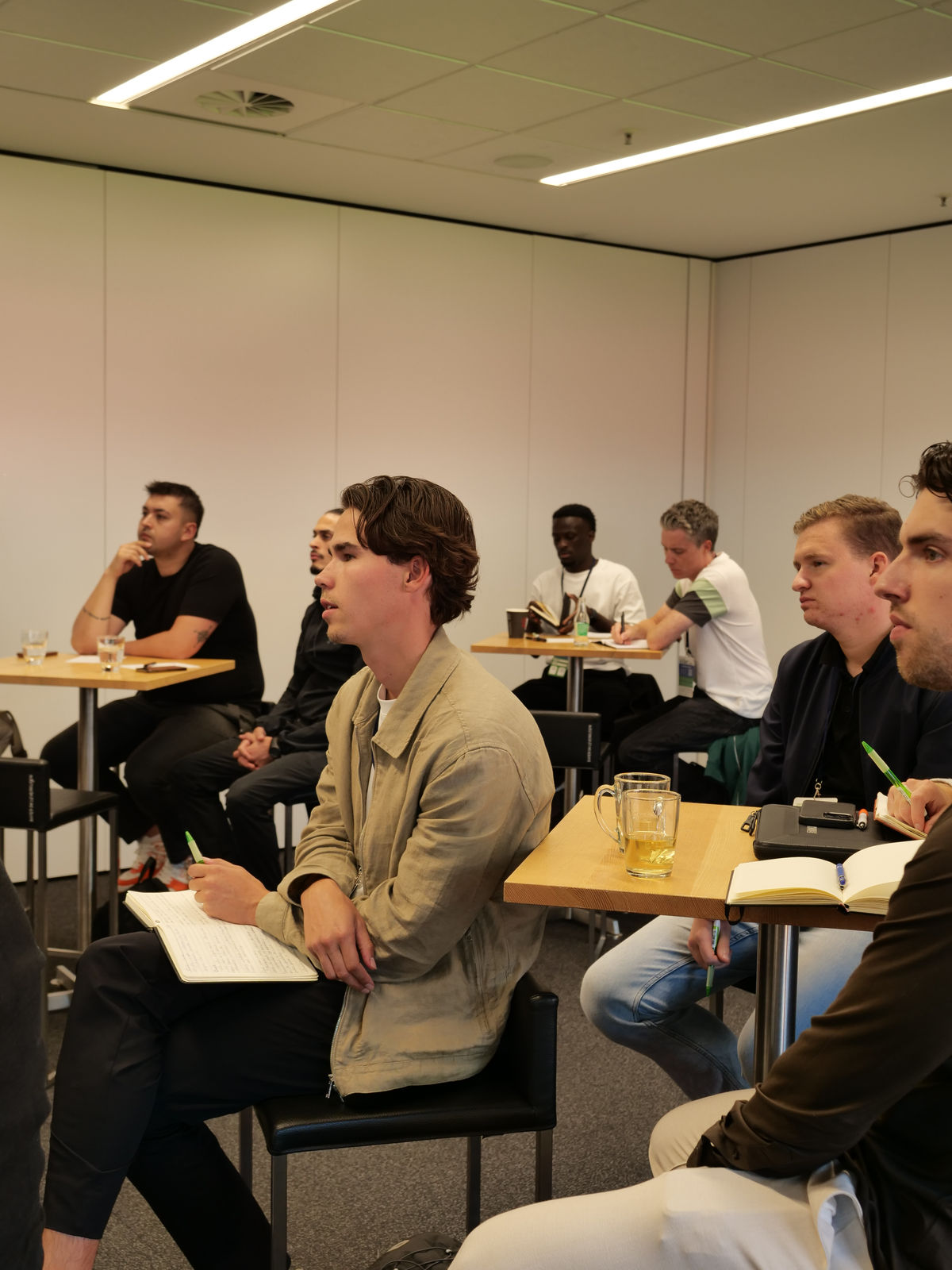
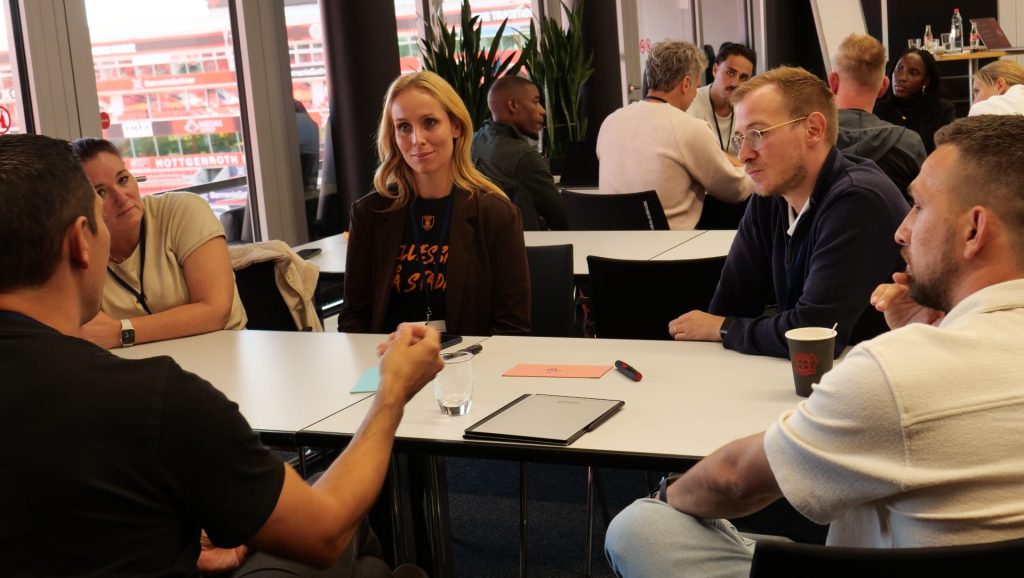
The afternoon transformed the conference from a space for listening into a space for active exchange.
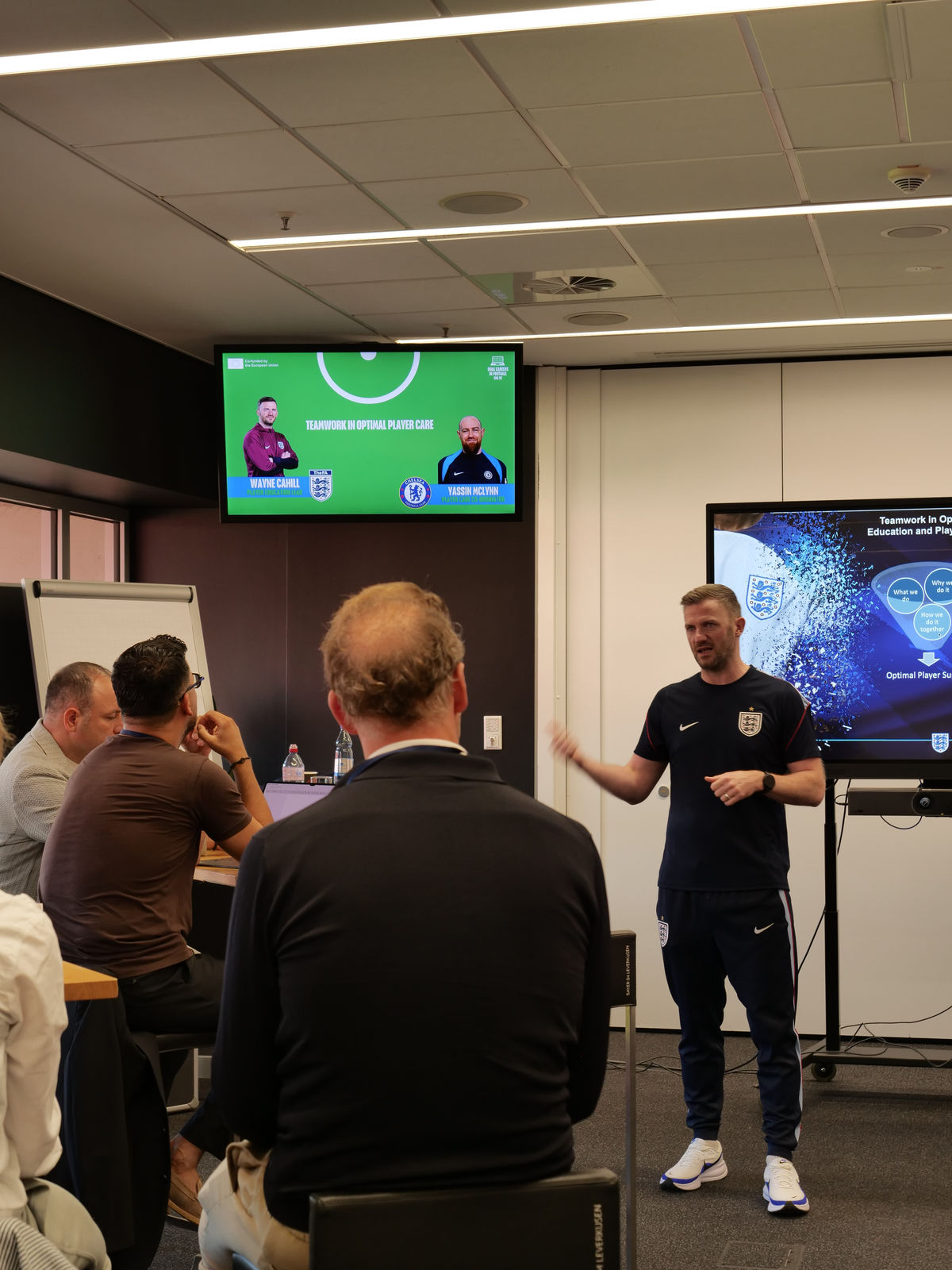
Across two workshop rounds, participants could explore practical approaches to dual career and holistic player development presented by organisations working directly within elite football.
The diversity of the workshops reflected just how broad dual career support really is.
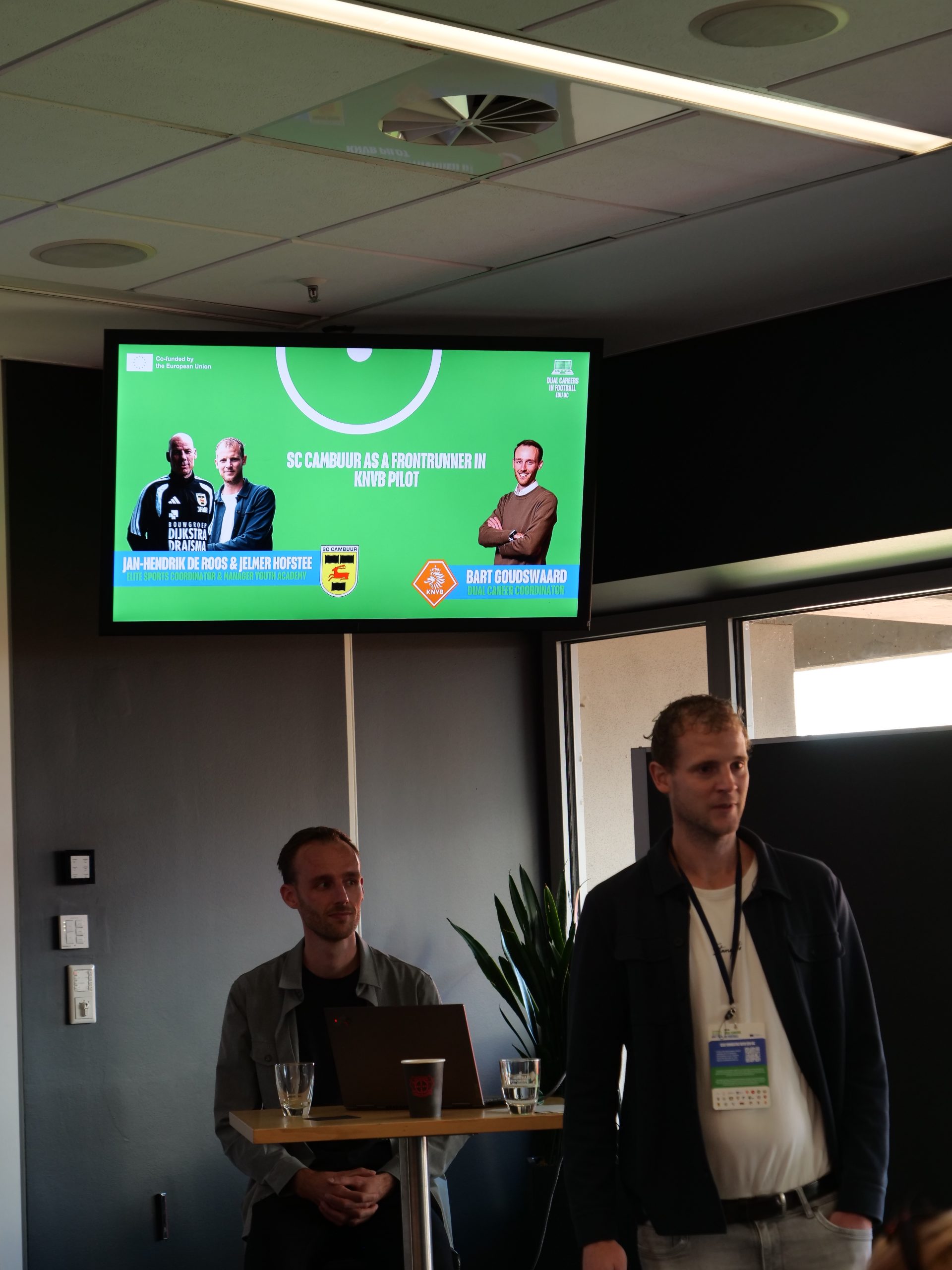
KNVB and SC Cambuur presented experiences from the Dutch Dual Development pilot, showing how structures such as a dedicated Dual Career Coordinator, cooperation with schools, awareness sessions and individual guidance can be integrated into a football environment.
Athletic Club Bilbao approached the subject through identity. Its GaraTHuz programme demonstrated how supporting young athletes in developing a broader sense of who they are can contribute to autonomy, responsibility and sustainable performance both within and outside football.
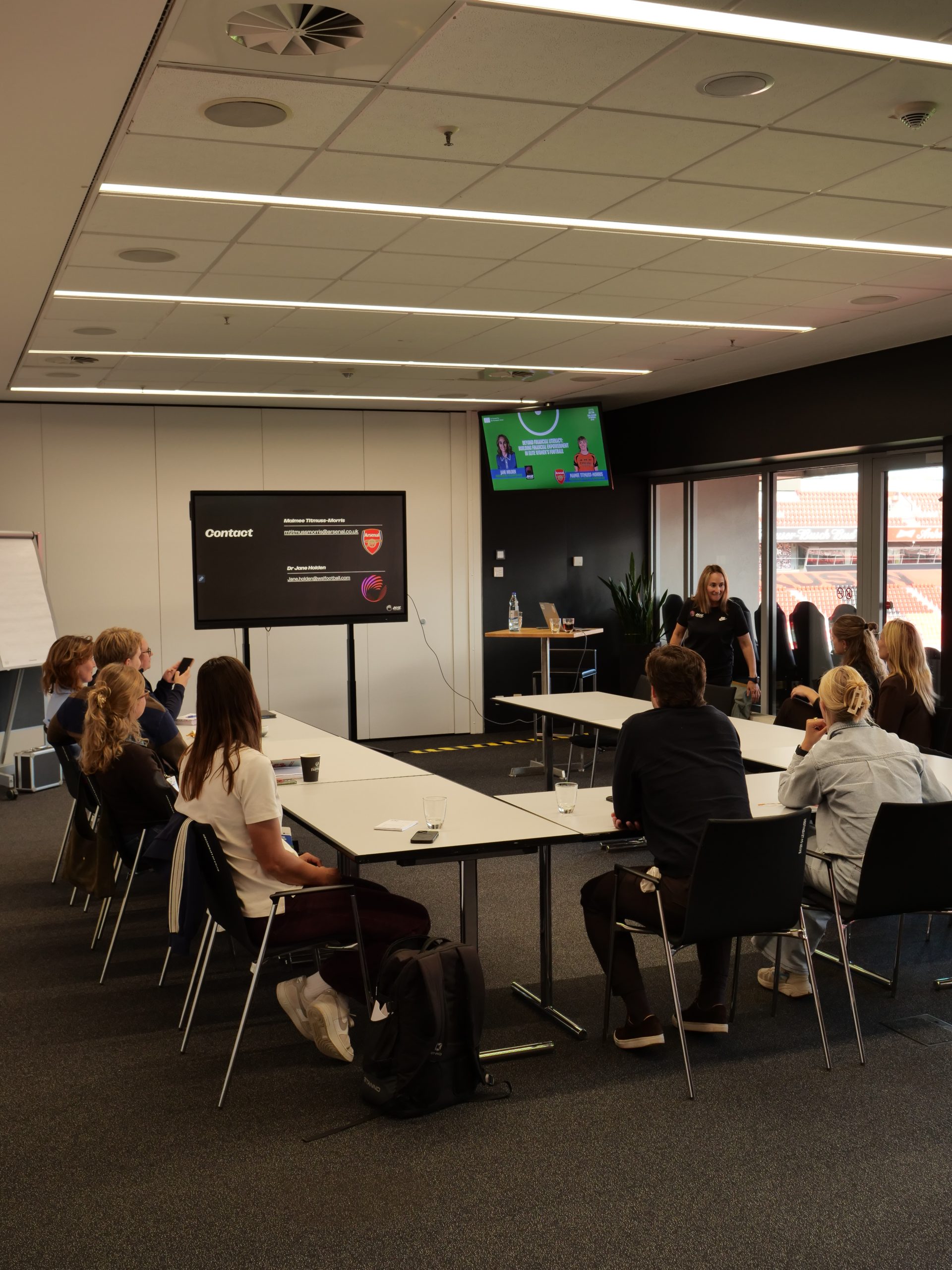
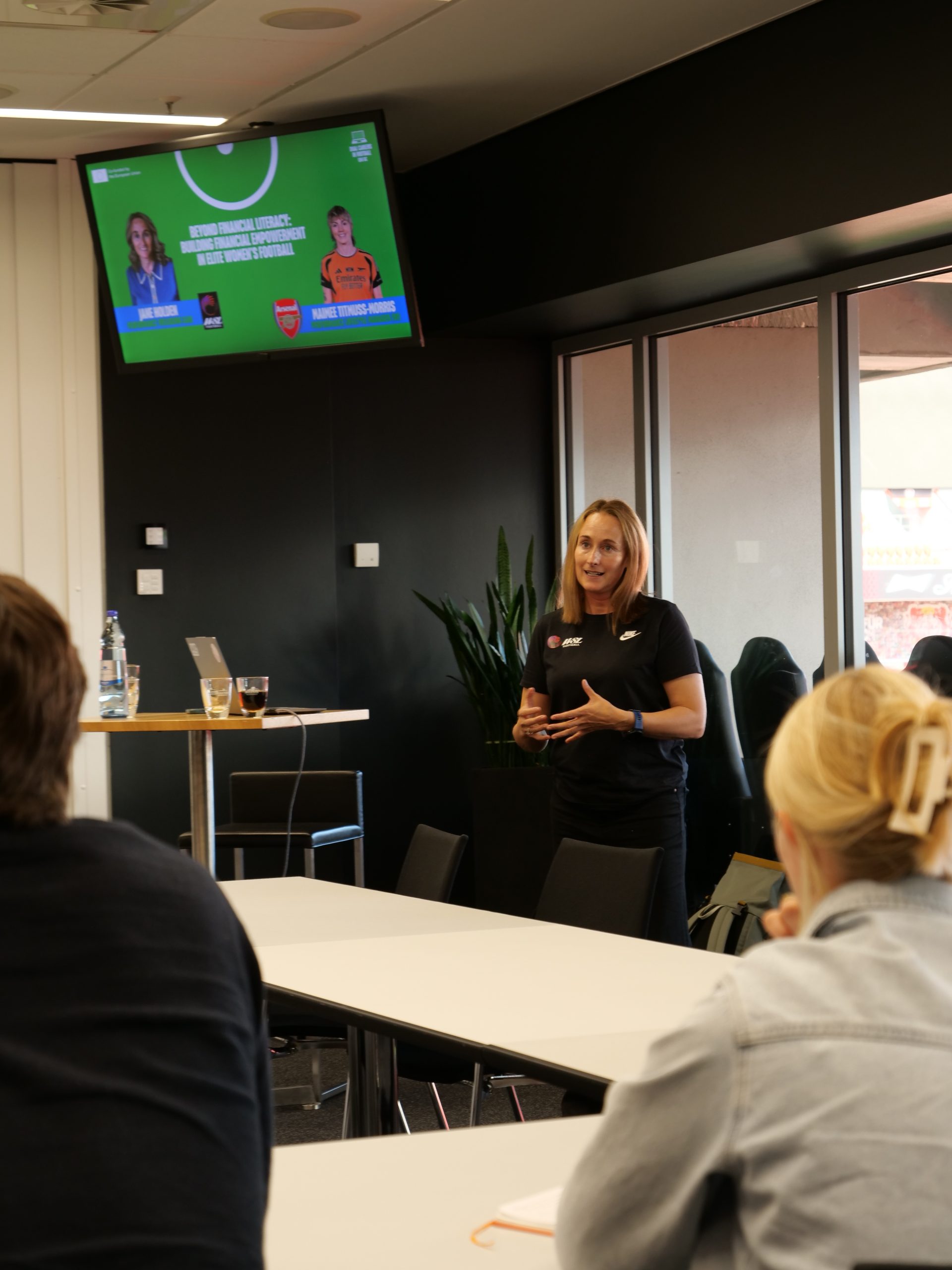
Other sessions explored player care and cooperation between football organisations, educational pathways, individual career counselling and social skills, and financial empowerment in elite women’s football.
Rather than presenting one universal solution, the workshops demonstrated that effective dual career support can take many forms. What works in one club or country cannot simply be copied into another environment. The challenge is to understand the needs of individual players and build structures around them that make sense within each organisation.
More than preparing for “life after football”
One of the strongest messages to emerge in Leverkusen was that dual career should not be understood simply as a safety net.
Education is not only something a young player needs in case a professional football career does not work out.
Personal development is not separate from sporting development.
And preparing young people for life beyond football does not mean reducing their ambition to succeed within it.
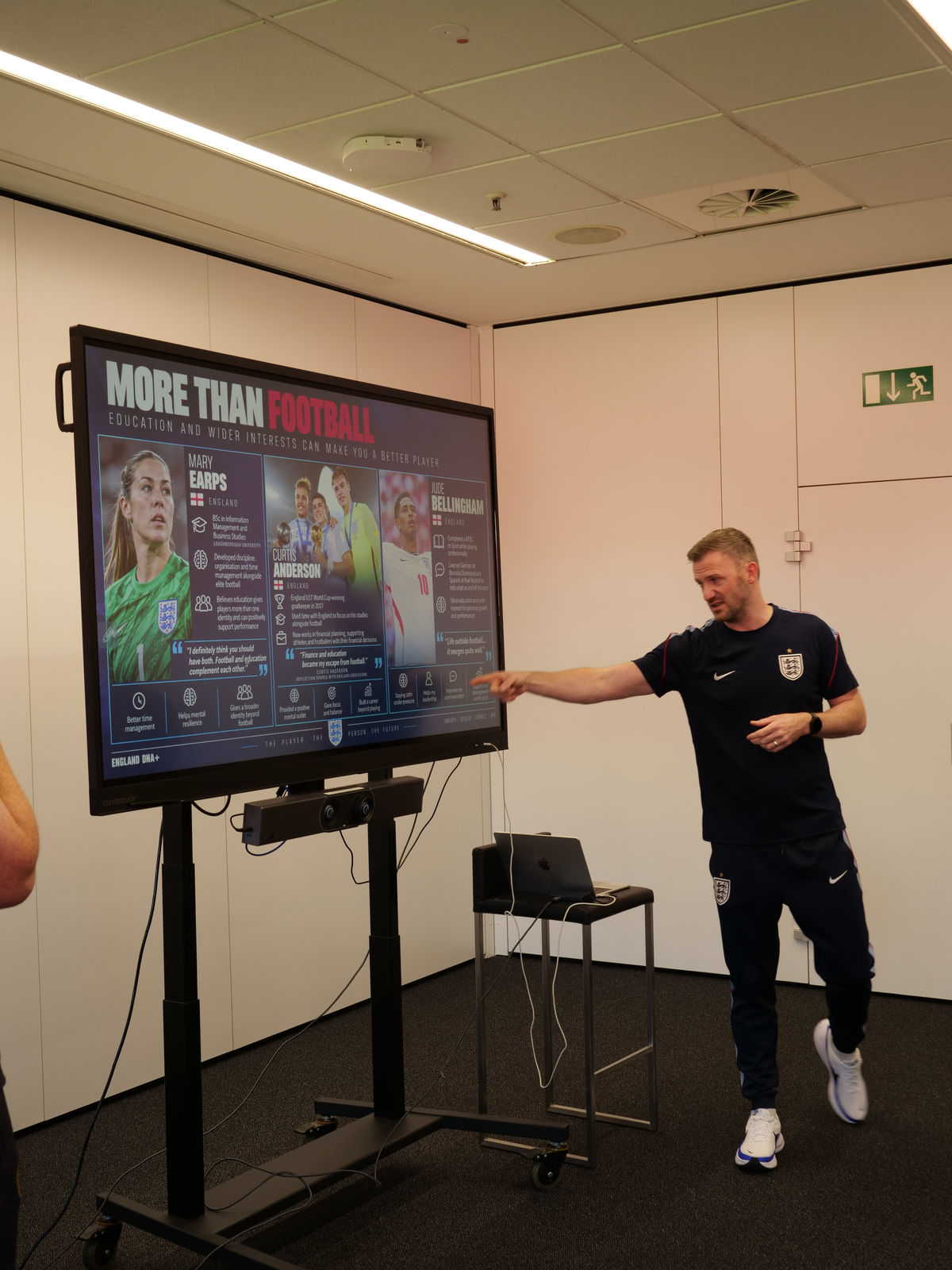
Instead, the discussions throughout the conference showed how education, broader interests, personal identity, wellbeing and football can reinforce one another.
This shift in perspective is also central to EDU-DC. Throughout the project, the focus has been on strengthening the environments surrounding talented young football players and equipping the professionals working with them with the knowledge and tools needed to provide better support.
Connecting people across European football
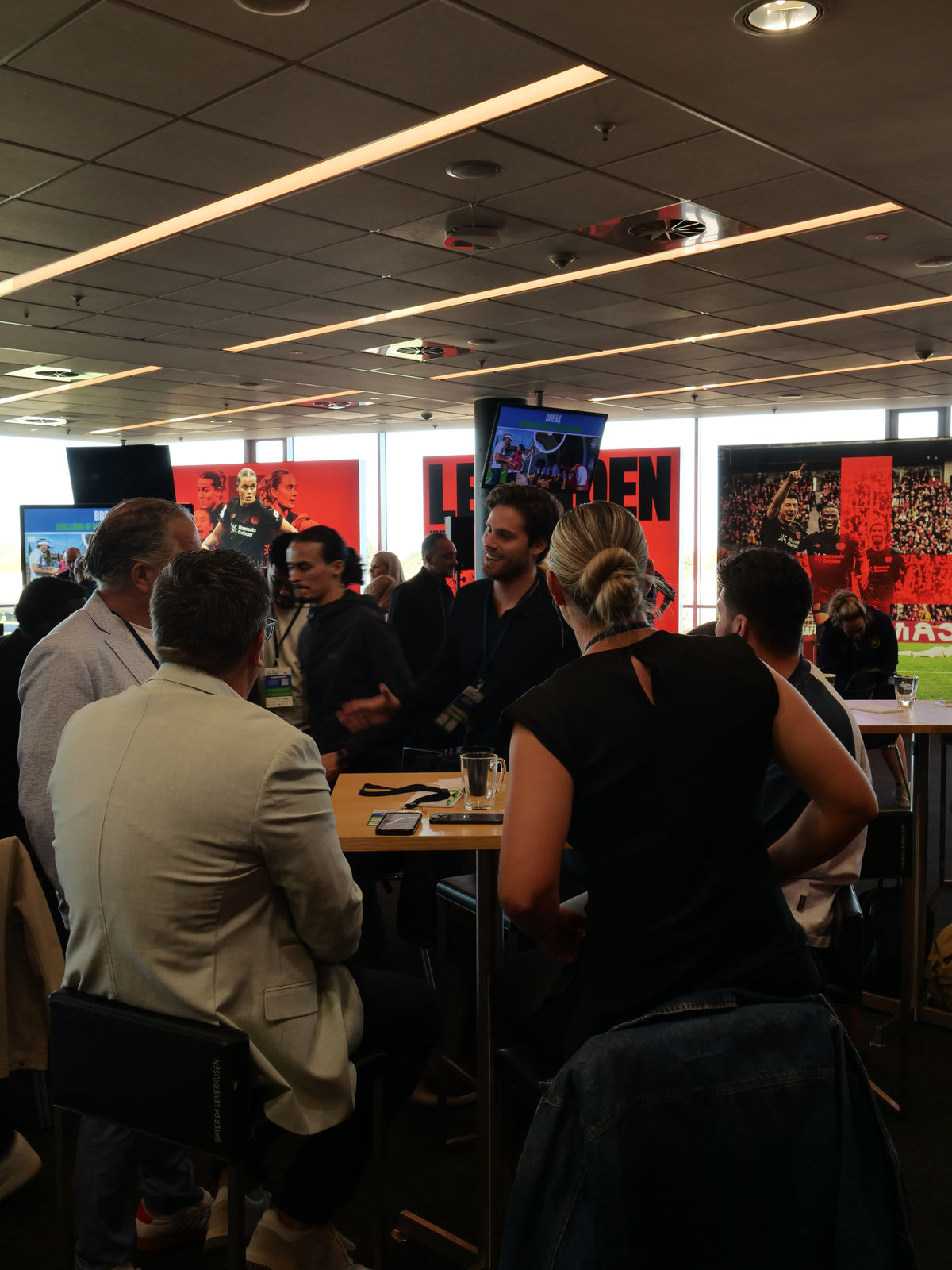
Beyond the stage and workshop rooms, an equally important part of the conference happened in the conversations between sessions.
Bringing together professionals working in different football systems created an opportunity to compare challenges, exchange ideas and establish connections between organisations that may approach dual career differently but ultimately face many of the same questions.
For EDU-DC, this exchange is an important part of the project’s legacy.
Research, educational programmes and practical tools can provide a foundation, but long-term change also depends on people continuing to share experiences and bring those ideas back into their own clubs, federations and football environments.
The final whistle – but not the end of the journey
The International Conference in Leverkusen marked an important moment as the EDU-DC project approaches its conclusion.
It was an opportunity to look back at what has been developed through the project, but also to look forward.
The experiences shared at BayArena showed that there is growing recognition within football that developing a young player means looking beyond technical, tactical and physical performance.
It means recognising the student, the young adult and the future professional behind the footballer.
A sincere thank you goes to Bayer Leverkusen and everyone at BayArena for hosting the conference, to all speakers, panellists, workshop leaders and ambassadors who shared their knowledge and experiences, and to all EDU-DC partners and pilot clubs for their contribution throughout the project.
And, of course, thank you to everyone who travelled to Leverkusen, joined the discussions, asked questions, shared experiences and helped turn the conference into a true European exchange on dual career.
The conference may have reached its final whistle, but the work continues.
Supporting players on and off the pitch is not only about preparing them for what comes after football. It is about creating better conditions for them to develop today – as players and as people.